How Should We Understand Burning Incense?
How Should We Understand Burning Incense?
How Should We Understand Burning Incense?
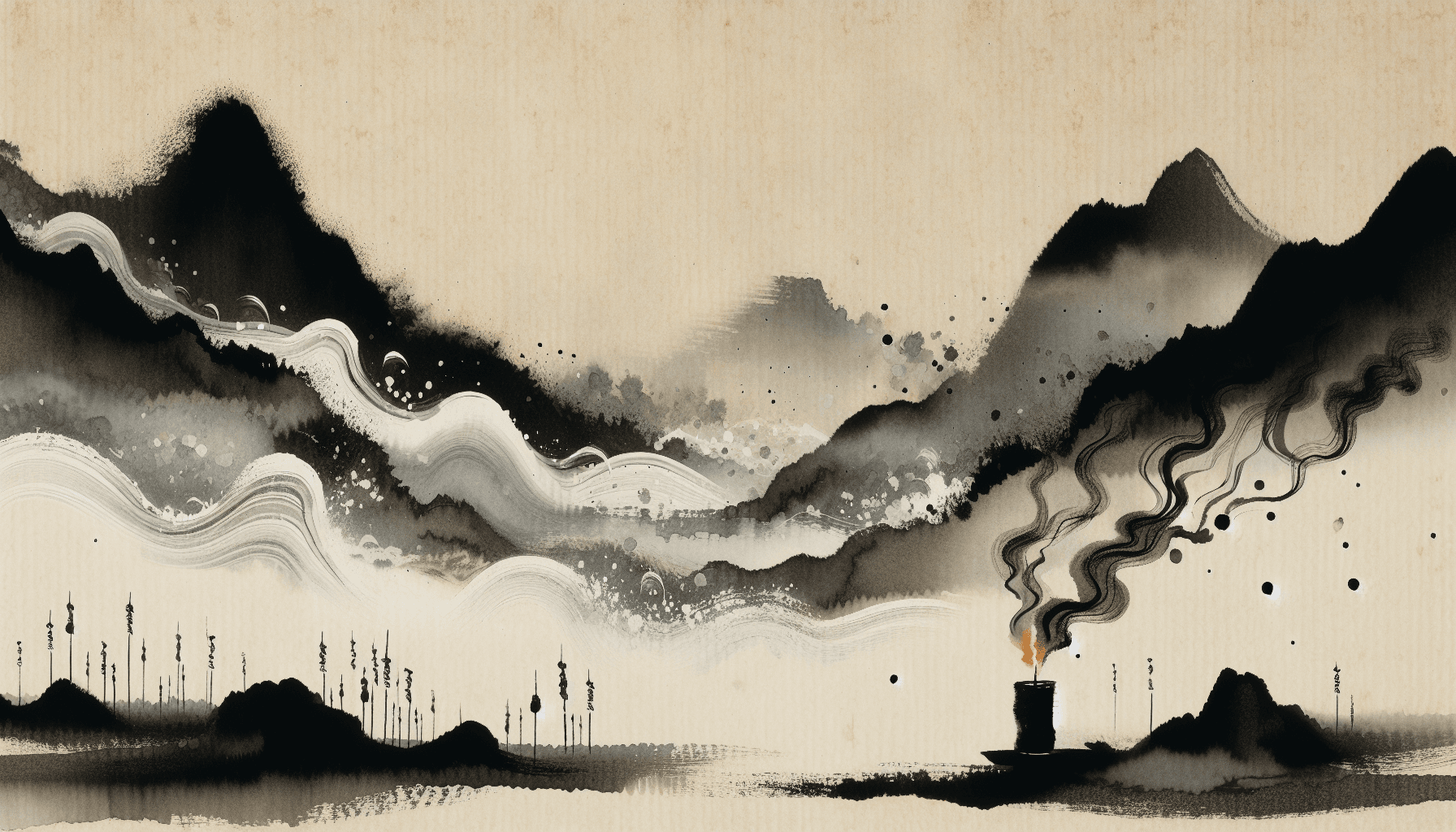
Ordinary people generally understand burning incense as basically synonymous with making an offering, or at least as something that should be accompanied by an offering. This leads to an interesting phenomenon: it seems that in nearly all ancient religious rituals around the world, people burn something.
This actually comes from the way ancient people understood the gods: the gods lived in heaven, so if one wanted to honor them, one had to send good things up to heaven. But gold and silver, jewels, chicken, duck, fish, and meat could not overcome gravity. So our clever ancestors came up with a solution: burn the good things, because smoke can rise into the sky. In this way, the smoke became food for the gods. If human beings did not provide this food regularly, the gods would go hungry.
There is an old Chinese saying: “Among the three forms of unfilial conduct, having no descendants is the gravest.” This is what it refers to. To have no descendants means to have no one to carry on the family line—in other words, no heir who can burn offerings to sustain the spirits of the ancestors. In everyday speech, the end of a family line is described as “cutting off the incense fire,” and that is exactly what it means. So having no descendants implies not only a lack of filial piety toward one’s parents, but also a lack of filial piety toward all one’s forebears. Naturally, this was seen as the greatest form of unfilial conduct. Even today, many parents who pressure their children to marry and have children still use this saying as a weapon, though they no longer understand its original meaning.
So in Buddhism, to whom is incense being offered? That is harder to say, because different scriptures give different explanations. And what use does burning incense have? Most ordinary people understand it as a way to ward off misfortune and pray for blessings. There are indeed Buddhist texts that support this view, but the mainstream opinion holds that our fortune and misfortune arise chiefly from the workings of karma, and karma cannot be altered by burning incense.
The development of Buddhist thought into Buddhism as an organized religion was, to a large extent, shaped by human psychological tendencies; the rituals and precepts within Buddhism were gradually patched together as people pursued a sense of belonging and superiority.
Of course, these ritualized elements are obstacles to our understanding of Buddhist thought. Only by setting them aside can we truly enter the world of Buddhist wisdom. Which matters more, content or form? That is a classic problem in cultural history.