Can this bucket of cold water poured over Robin Li’s head extinguish Baidu’s hopes in the field of artificial intelligence?
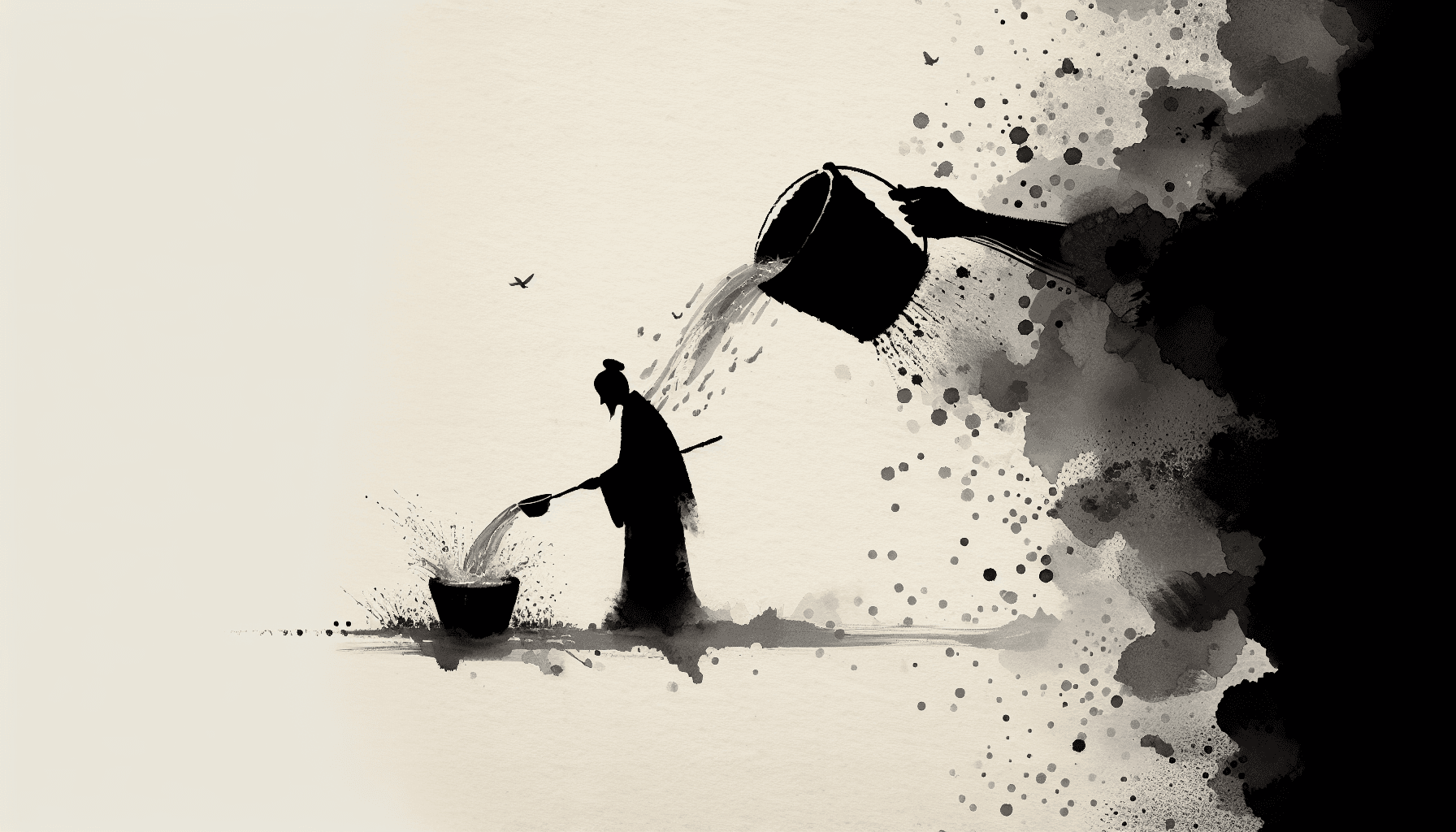
Can This Bucket of Cold Water Poured on Robin Li Extinguish Baidu’s Hopes in AI?
In recent years, criticism of Baidu has never really stopped. If “missing the golden opportunity of mobile internet” is a regretful summary of how Baidu fell behind after once standing firmly in the BAT triangle, then the scandal over Putian hospitals and Baidu’s paid search ranking shattered the company’s public image as an internet giant. Overnight, crises flared on all sides; with public opinion eager to kick a man when he’s down, gossip about “Robin’s family matters,” “female college student singing a tribute,” and Baidu’s weak PR response all became part of the various negative narratives surrounding the company. Yet smack in the middle of this crisis, Baidu tried hard to reinvent itself through the new concept of artificial intelligence, pushing a strategic shift toward AI. At one point, it nearly pulled off a brilliant turnaround, with its market value climbing to just a step away from the $100 billion mark.
But the hope of joining the $100 billion club vanished almost instantly with Lu Qi’s departure. Lu’s slogan “All in AI” showcased Baidu’s determination and effort to pivot, but under Baidu’s internal system this remained more slogan than reality. Even before Lu left, the departure of a group of AI legends represented by Andrew Ng had already signaled that Baidu would start to decline in this field before ever reaching its peak. On the substantive business level of AI, the appeal and influence Andrew Ng brought to Baidu was in some ways even greater than Lu Qi’s. As the leader of the “Google Brain” project, Andrew Ng’s global impact in AI (overall influence) might well rank among the top three. The arrival of such a heavyweight figure instantly boosted Baidu’s AI stature by several notches, and the other top-tier experts who joined for his sake significantly increased Baidu’s real competitiveness at the time. That’s what led to the sudden emergence of Baidu Brain, the rapid progress and opportunities in autonomous driving, voice assistants, and other AI domains.
However, the very factor that drove Baidu’s rise also contributed to its fall. Andrew Ng’s departure became the first domino piece in Baidu AI’s decline. After him, Wang Jing, Lin Yuanqing, and ultimately Lu Qi all left in turn, leaving “All in AI” as an empty phrase—until one day Robin Li began to claim he had never actually said “All in AI.”
Rumors about Baidu’s internal system have been swirling ever since. Massive profits from the search engine and paid ranking give the related business units enormous clout. By contrast, AI, as a forward-looking new business, may have huge market potential, but it has not yet matured into a real industry that generates revenue. So even if Robin Li is personally determined to push AI development, he is still constrained by internal dynamics. Moreover, in such a gigantic organization, it remains unclear—even to Robin himself—whether AI really is the opportunity for a gorgeous transformation and return to the summit, or merely a catchy concept to bolster valuation. For a business that cannot, in the short term, produce cash flow on the scale of paid search, even if Robin wanted to go “All in AI” like Lu Qi, in practice he might simply not have the ability to do so.
The market, however, sees things clearly. Lu Qi’s departure directly wiped more than $10 billion off Baidu’s market value—enough to show how the market evaluates Baidu’s prospects in AI. And after Lu, no matter how personally charismatic Robin Li might be, Baidu is unlikely to attract figures at the Andrew Ng or Lu Qi level again. For that reason, Baidu’s AI Developer Conference has largely become an event that Robin Li alone struggles to hold up. After all, as Baidu’s founder, once he’s grabbed onto AI as a life-saving straw, he must hold the line even if everyone else leaves. From an entrepreneur’s perspective, Robin Li is a somewhat sympathetic figure; his helplessness mirrors that of many corporate leaders. Having a good idea and direction does not guarantee real success. But the market has no sympathy. Whether the problem is a flawed strategy, half-hearted reform, or a decaying system, Robin Li must ultimately bear the responsibility for decisions. And that is precisely why this literal bucket of cold water today can only be poured on his head. The best he can do is rely on his own intelligence and experience to defuse the embarrassment on the spot. Whatever he does, though, he cannot wash away the chilling effect this has on Baidu’s AI ambitions.
From 2017 to now, Baidu’s AI Developer Conference is only in its third year—and it has already run out of stories to tell. The rousing “All in AI” proclaimed by Lu Qi in 2017 had turned into Robin Li’s bland “Yes AI Do” by 2018. By 2019, the new slogan “Everyone Can AI” sounds almost ironic. If everyone can AI, can Baidu? If everyone can AI, what is Baidu for?
Baidu’s ambition to become a leader and platform in AI is, in principle, the right choice for a giant of BAT’s caliber. Yet compared with Alibaba and Tencent today, Baidu’s once slight advantage in AI has completely evaporated. Given that Baidu’s scale and investment are now far behind Ali and Tencent, it is hard to believe that a company with no edge in technology or capital can once again stand out in the competition. And if today’s bucket of cold water really extinguishes Baidu’s last glimmer of hope in AI, then for Baidu, if it cannot even hold on to AI as a life-saving straw, it is deeply worrying how much further it can go in the internet era relying on search alone.