Universality and Childlike Innocence in Scarecrow
Universality and Childlike Innocence in Scarecrow
Universality and Childlike Innocence in Scarecrow
Had I not been looking everywhere for fairy-tale books to read to my son, I might never have come across Ye Shengtao’s Scarecrow. But after reading it, I found that almost none of the stories in the book seem suitable as bedtime stories for him. On the one hand, he is still a bit too young to fully understand them. More importantly, Ye Shengtao’s Scarecrow is completely different in style from the familiar Western fairy tales that everyone knows so well. There are no princesses marrying princes—in fact, there are no princesses or princes at all. There are no knights, no wizards. Although the book does contain a rich and unrestrained imagination, it is entirely unlike the light reading children are accustomed to. Far from feeling easy or cheerful, it leaves one with a heavy heart.
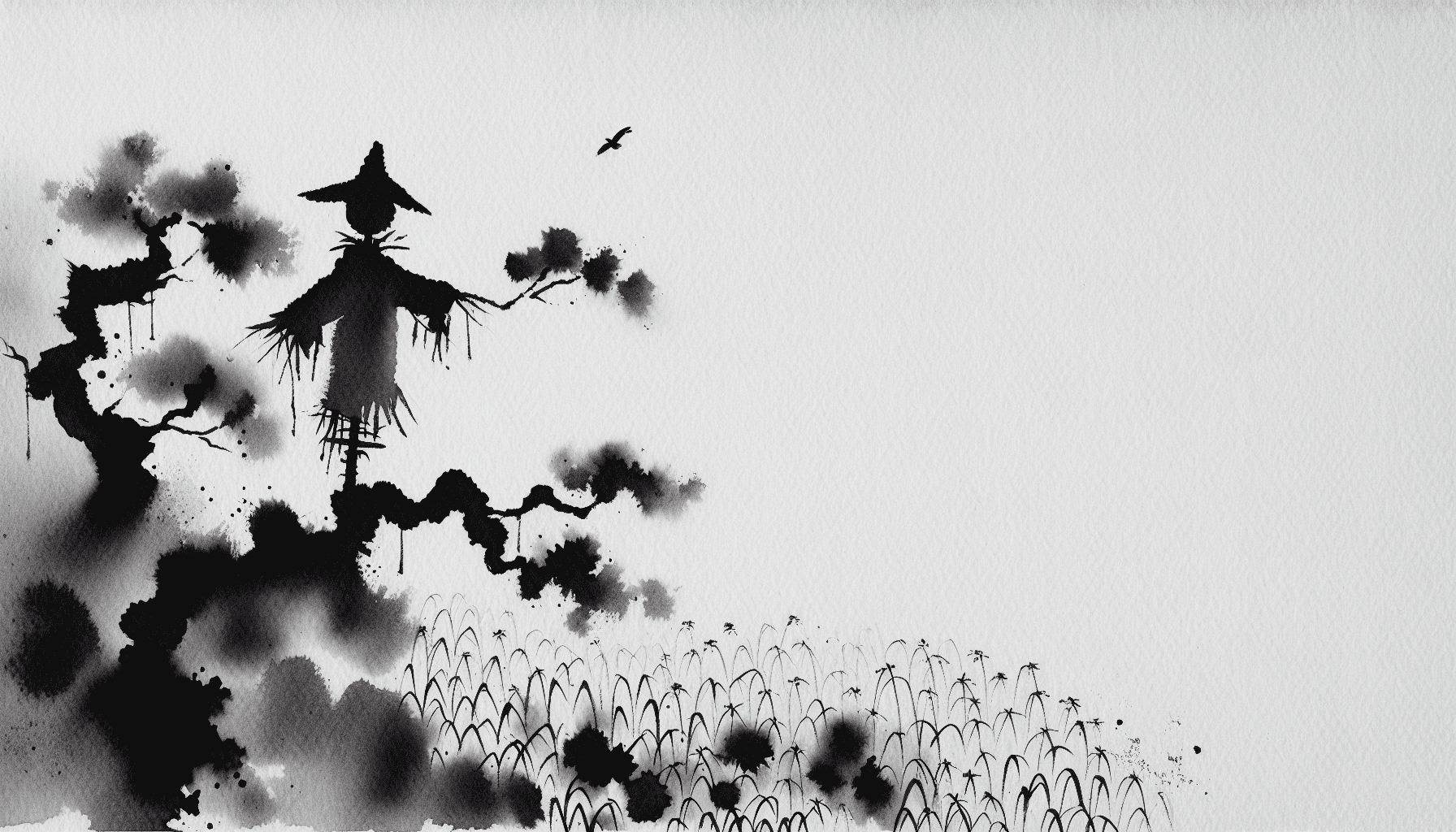
Most of the stories in Scarecrow depict the sufferings of ordinary people. Children today, living far removed from war and hardship, may find it difficult to understand the author’s universal compassion in the context of his own time. But as I read, I could not help being deeply moved again and again. The most representative story is surely the title piece, Scarecrow. Through the eyes of the scarecrow, the author shows different people enduring different forms of suffering, while the scarecrow itself can neither speak nor act. There is helplessness and pain in this—having a bodhisattva-like heart full of compassion for all, yet no power to save anyone. In the end, it can only collapse silently in the middle of the field. For a child’s tender heart, this kind of “fairy tale” may be too heavy. Yet it is precisely this universal compassion that suddenly brought Ye Shengtao vividly to life in my mind. He was no longer just a cold label in a textbook, such as “educator.”
The book also contains stories about love, such as The Love of the Little Yellow Cat, but there is nothing romantic about them. On the contrary, reading them brings a faint sense of horror. It reminds me very much of a joke from recent years:
Man: “What is it about me that you don’t like? I can change.” Woman: “What is it about me that you do like? I can change.”
The love in the story is failed and cruel, making one wonder whether the text originally alluded to something personal—perhaps even a true reflection of the author’s own heartbreak. In any case, it has nothing to do with fairy-tale romance between princes and princesses. If one were really to read it aloud to children, I fear it might leave them with a shadow hanging over their idea of love.
There are also warm and tender passages in the book, such as the opening story The Little White Boat, and Fang’er’s dream, which may come closest to the childlike spirit we associate with the word “fairy tale.” Yet even here, the author’s imagination remains rooted in the real world rather than building a fully separate fairy-tale realm. Behind these seemingly happy and complete stories, what one senses instead is an attempt to compensate for and reimagine the tragedies of real life. Read in that way, they become even more unsettling.
Beyond these, A Seed uses a humorous tone to portray the charm of ordinary labor, while The Stone Statue of an Ancient Hero uses dialogue around a stone statue to encourage collectivism and push back against individual heroism. They all feel like songs sung for ordinary people, and they also reflect the author’s ideas and ideals of his time.
In the end, Scarecrow may not really be suitable as a collection of fairy tales for today’s children, but it is profoundly meaningful as a work of education. Through these writings, one can clearly glimpse why Ye Shengtao was regarded as such a great educator. No matter how times change, writing and education for children should always speak to the world they live in. From that perspective, the stories in Scarecrow are more beautiful than all the fairy tales about princes and princesses.